- The Southshore Circle
- Posts
- Piney Point Part Two?
Piney Point Part Two?
It’s Déjà Vu in Southshore

Southshore Forecast
Today — High: 82°F, Low: 64°F 🌧️50% Chance of rain
Tomorrow — High: 83°F, Low: 64°F ☀️
Brought to you today by:

Expert Plumbing for Every Home and Need
THE SKINNY
• Mosaic’s Big Waste Pile
• US 301 Construction is More Than Annoying
• The Fall of Florida Citrus
• We’re Going Back to the Moon
Featured Story
Here We Go Again
Mosaic’s plan to expand a Riverview gypstack is raising concerns about safety, toxic waste, and hurricane risks in Southshore

Mosaic is looking to expand one of its phosphate waste stacks in Hillsborough County, and it’s already sparking concern across Southshore. And for very good reason. The proposal would expand the existing gypstack in Riverview by nearly 180 acres, pushing it closer to Tampa Bay and nearby waterways. If approved, construction could begin as early as 2028 and take about two and a half years to complete.
These stacks are used to store phosphogypsum, a byproduct of fertilizer production that contains radioactive elements and other potentially harmful materials. Because of that, it has to be contained in specially engineered piles that can tower hundreds of feet into the air. That already sounds like a disaster.
The expansion would also significantly increase how much waste the site can hold, with estimates pointing to tens of millions of tons of additional material and extending the life of the facility by more than a decade. And for many residents, this isn’t just another project. It’s a reminder of what’s already happened.
Critics have begun voicing opposition, and much of that conversation is happening online. Social media is filled with comments raising concerns about EPA standards, toxic waste, and what could happen if a major storm hits the area. One name keeps coming up. Piney Point.
In 2021, the site made national headlines after a leak led to the release of hundreds of millions of gallons of contaminated wastewater into Tampa Bay to prevent a full structural failure. It forced evacuations, raised environmental concerns, and left a lasting impression on the community. That memory is driving much of the pushback today.
Residents and environmental advocates are questioning what expanding another stack means in a coastal area like Southshore, especially with hurricane season always looming. The concern is not just about day-to-day operations, but about worst-case scenarios, including storm surge, flooding, or structural failure in a region that’s already proven vulnerable.
Mosaic has stated that its facilities are regulated and monitored, with safeguards in place designed to prevent failures like those seen in the past. The company has also pointed to mitigation efforts, including preserving nearby land and offsetting environmental impacts.
But for many in the community, that reassurance only goes so far. This isn’t just about one expansion. It’s about trust, risk, and how much of it people are willing to accept in a place that’s already seen what can happen when things don’t go according to plan. And as more voices weigh in, it’s clear this is going to be a conversation that doesn’t go away anytime soon.

If It’s Not on Your Side of the Road… Good Luck
Southshore drivers are changing habits as construction makes stopping at local businesses more difficult

It wouldn’t be a Southshore newsletter if we didn’t talk about traffic at least once a month. So, here you go.
If you live anywhere near, well, Florida at all, then you’ve probably just about hit your limit on traffic and construction. But it’s more than just a headache for drivers. Parts of US 301 and Big Bend have been under construction for so long that businesses are starting to feel the impact.
These projects are part of a broader effort to expand capacity, improve safety, and keep up with the rapid growth in Southshore. The area has seen a major population increase over the past few years, and roads like 301 and Big Bend are being widened to handle the added traffic.
But while that work is happening, access has gotten more complicated. Lanes shift, entrances close, and what used to be a quick turn now feels like a full detour.
Even without construction, I’ve got rules for crossing traffic. For example, it doesn’t matter how bad I need gas or what the current price at the pump is (recent events might be cause for reevaluation), I will only go to a gas station on the same side of the road I’m traveling.
Construction brings on a new level of Calculus. Drivers must now work the math on how bad you need that giant cookie or brownie-topped milkshake when you’ve got to cross 5 lanes, dodge 3 construction barriers, and navigate 2 closed roads just to get it.
This is the effect construction can have on businesses. People value convenience, and when that goes away, so does the desire to stop at all. Sometimes, it’s just easier to keep heading home.
For many local businesses, especially those that rely on drive-by traffic, fewer easy access points can mean fewer customers walking through the door. Some business owners have already started noticing slower traffic during peak construction periods.
And while the long-term goal is better roads and smoother commutes, the short-term reality is that some businesses are navigating a tough stretch in the meantime.

Email us today at:
Food For Thought
Citrus greening disease and development are shrinking orange groves across Florida, impacting prices and local supply

It used to be everywhere. Orange groves stretching for miles. Fresh juice that actually came from just down the road. A piece of Florida that felt permanent.
That idea has changed quite a bit. Florida’s citrus industry, once one of the most recognizable parts of the state, is quietly disappearing. And the biggest reason comes down to something most people have never seen.
A tiny bug. Citrus greening disease, spread by an insect called the Asian citrus psyllid, has been attacking Florida orange trees for years. Once a tree is infected, it produces smaller, bitter fruit and slowly declines. There’s no real cure, and over time, entire groves have been lost.
The impact has been massive. Over the past couple decades, orange production in Florida has dropped dramatically, and growers have been fighting a losing battle between disease, hurricanes, and development pressure. Some farms have shut down entirely. Others are trying new methods just to survive.
But that’s only half the story. The other half is us. Groves that once produced fruit are being replaced with housing and commercial development as the population continues to grow. If you’ve been here for more than two decades, then you know exactly what I’m talking about.
I’m sure plenty of you recall walking home from school and snagging an orange off a tree. Groves back then were as plentiful as storage companies and car washes. Now, not so much.
But it’s not just that we are losing a staple of what made Florida, Florida. It’s higher orange juice prices. Fewer locally grown products. As well as the slow fading of something that used to define Florida.
But there is still hope. Researchers are working on disease-resistant trees and new ways to protect crops, but it’s a long process, and the industry is far from what it once was.
Because this isn’t just about oranges. It’s about a part of Florida that’s been here for generations. And whether it stays that way is still an open question.
Things to do
What’s Washing Up on The Shore This Week
Easter Bunny Storytime (Gibsonton)Date: Wednesday, March 25, 2026 Time: 10:30 AM | Strawberry Season/Healthy Eating (Ruskin)Date: Wednesday, March 25, 2026 Time: 3 PM | The Headbang Duo (Apollo Beach)Date: Thursday, March 26, 2026 Time: 6 PM |
Marketing on Facebook (Riverview)Date: Friday, March 27, 2026 Time: 1 PM | Dancing For Heroes - The Royal Soiree (Riverview)Date: Friday, March 27, 2026 Time: 6 PM | Live Music Night (Riverview)Date: Saturday, March 28, 2026 Time: 6:30 PM |
Your Weekly What in the World
NASA’s Artemis II rocket returns to the launch pad for the first crewed mission around the Moon in over 50 years
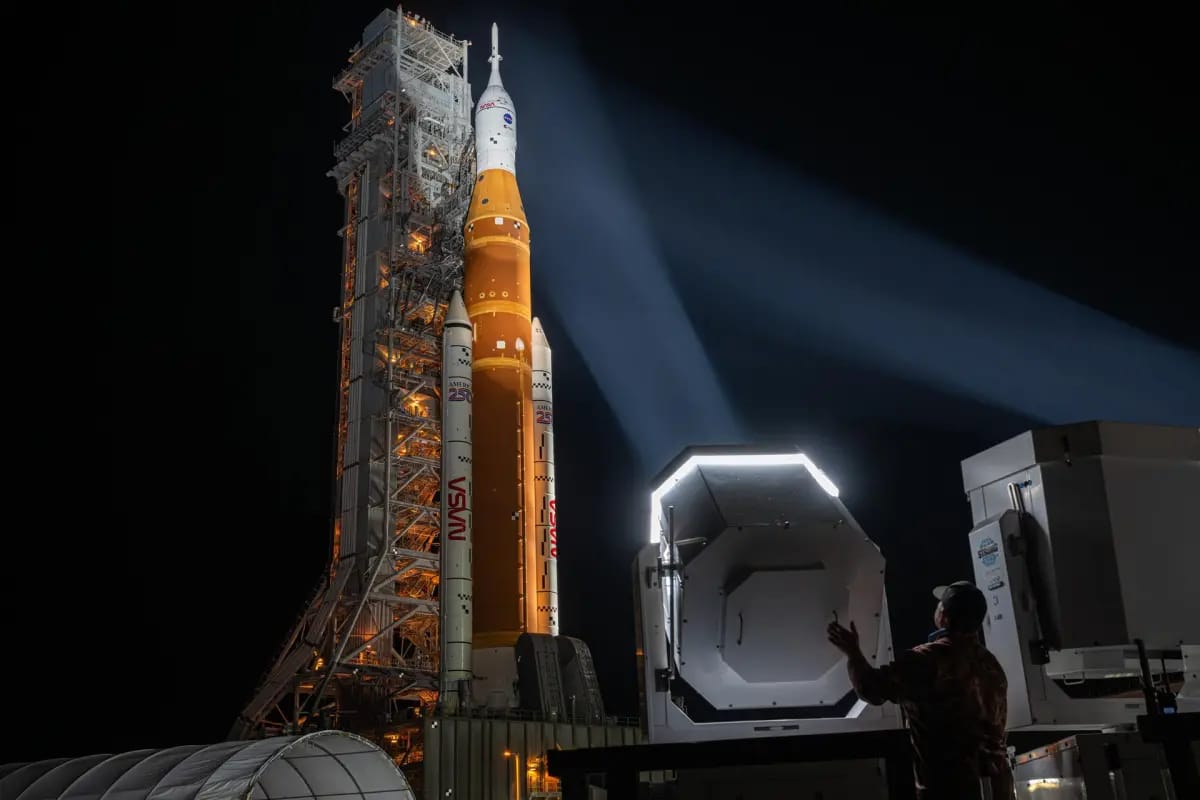
First, they went back to the Moon without people. Now they’re getting ready to send humans again.
NASA’s Artemis II rocket is back on the launch pad, setting up what could be the first crewed mission around the Moon in more than 50 years.
After months of testing, delays, and last-minute fixes, the massive Space Launch System rocket has rolled back out to Kennedy Space Center in Florida.
The goal is simple, at least on paper. Send four astronauts on a roughly 10-day trip around the Moon and bring them back safely. But getting there hasn’t been simple at all.
Earlier this year, engineers had to pull the rocket off the pad to fix issues, including a helium flow problem and other system checks that needed attention before launch. Now, with those fixes complete, NASA is aiming for a launch window that opens in April. And if it works, this becomes a turning point.
This isn’t just another test flight. It’s the mission that proves humans can travel deep into space again, setting the stage for future landings on the Moon and eventually, missions to Mars. It also marks something we haven’t seen since 1972. People leaving Earth’s orbit and heading back toward the Moon.
For now, everything comes down to the next launch attempt. Because after years of delays, testing, and billions of dollars, the question isn’t whether we’re going back to the Moon. It’s whether this is the moment it finally starts.

We Know a Guy…or Girl

Need a painter? A plumber? Someone brave enough to tackle that lightbulb orbiting 30 feet above your living room?
Our all-new service catalog is now live, connecting you with trusted local pros right here in the community. And we’re just getting started. The list is growing every day.
If you’re a local business and want to be featured, shoot us an email to [email protected]
“Keep it Local!”
Foodies Only

Ticki Docks
If you’re looking for a spot that feels like a mini vacation without leaving Southshore, this might be it.
Tiki Docks River Bar & Grill has become a go-to for waterfront views, tropical drinks, and a laid-back atmosphere that makes you forget you’re still just minutes from home.
The menu leans into that Florida vibe with fresh seafood, tacos, burgers, and drinks that feel like they belong on a beach somewhere. But more than anything, it’s the experience.

If you’ve got a restaurant, food truck, or even a lemonade stand, it could be featured here. Email us at [email protected]
Local Sports

Our area high schools boast state champions and multiple division titleists. Come out and show your support for these teams and for our community.
Girls Flag Football
| Baseball
| Softball
|
Got news, events, or press releases that the Southshore needs to know about? Submit them here. (We’ll do our best to add press releases in our regular rotation.) If you’re looking to run an actual ad, go here instead.
“It’s The Southshore Circle-because staying informed shouldn’t feel like a full-time job.”
Until next time,

Keep It Local.
Reply